
 world goes to
 Program
| March 9 | |
|---|---|
| 8 – 8:30 a.m. | Breakfast |
| 8:30 – 9a.m. | Opening Speakers Samuel Graham, A. James Clark School of Engineering, University of Maryland Darryll Pines, University of Maryland, College Park Tsu-Jae King Liu, National Academy of Engineering Robert Crawhall, Canadian Academy of Engineering Ricardo Benn, Maryland Department of Commerce |
| 9 - 9:30 a.m. | Keynote: The Global AI Imperative: Compute as Critical Infrastructure Hanneke Krekels, AMD |
| 9:30 - 10 a.m. | Keynote: Building AI Data Center Infrastructurefor an Accelerating World Vik Malyala, Supermicro |
| 10 - 10:15 a.m. | Break |
| 10:15 - 11:15 a.m. | Panel: Computational Hardware Vik Malyala, Waguih Ishak, Madhavan Swaminathan, Bahgat Sammakia Moderator: Ankur Srivastava |
| 11:15 - 11:45 a.m. | Keynote: Export Control and AI: What to Know, What to Expect Matthew Borman, Akin |
| 11:45 - 12:45 p.m. | Lunch |
| 12:45 - 1:55 p.m. | Panel: Power and Water Resource Needs Barry Powell, Brian Wolf, Damena Agonafer, Yury Dvorkin, Laurent Pilon Moderator: Eric Wachsman |
| 1:55 - 2:05 p.m. | Break |
| 2:05 - 3:10 p.m. | Panel: The Impact of Policies and Regulations on Developing AI Infrastructure Rakesh Kumar, Jay Cougnet, Josh Sawislak, Abigail Singer Moderator: Gustavo Flores-Macias |
| 3:10 - 3:30 p.m. | Break |
| 3:30 - 4 p.m. | Keynote: Launching the Genesis Mission Hal Finkel, U.S. Department of Energy |
| 4 - 4:30 p.m. | Keynote: Opportunities for Semiconductors to Enable AI Capabilities for the Department of Defense and the Private Sector Devanand Shenoy, Strategic Advisor to IBM Semiconductors |
| 4:30 - 4:50 p.m. | Keynote: Data Center Development & Water Stewardship Josh Mazurek, META |
| 4:50 - 5 p.m. | Closing Remarks Samuel Graham |
| 5 - 6 p.m. | Reception: Top of the 7's (Top floor of The Hotel) |
| March 10 | |
|---|---|
| 8 – 8:20 a.m. | Breakfast |
| 8:20 – 8:30 a.m. | Opening Remarks Samuel Graham Ellen Zegura, National Science Foundation |
| 8:30 – 9 a.m. | Keynote: The Intelligence Revolution: Architecture for the Age of Inference Bikash Koley, Google Cloud |
| 9 - 9:30 a.m. | Keynote: Building AI Factories Pradeep Gupta, Nvidia |
| 9:30 - 10 a.m. | Panel: Co-Development and deployment of AI at scale Bikash Koley, Pradeep Gupta Moderator: Renu Bhatia |
| 10 - 10:10 a.m. | Break |
| 10:10 - 11:10 a.m. | Panel: Edge and Embodied AI Yiran Chen, Min Wu, Nirupam Roy, S.K. Gupta Moderator: Amitabh Varshney |
| 11:10 - 12:10 p.m. | Panel: Workforce Development Gamal Refai-Ahmed, Matt Goss, Jing Liu, Bobby Williams, Ben Sprague Moderator: Hal Daume |
| 12:10 - 12:30 p.m. | Open Discussion Samuel Graham & Gamal Refai-Ahmed |
| 12:30 - 1 p.m. | Lunch & Adjourn |
* No Video Recording or photography allowed in sessions
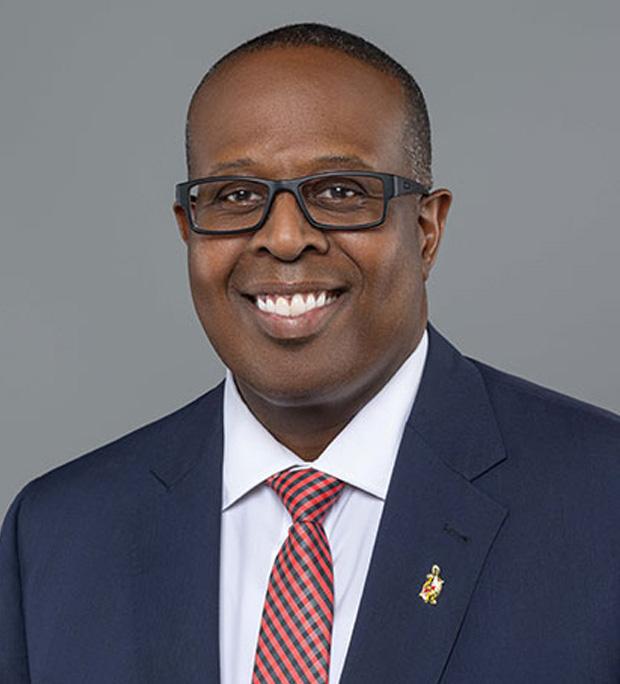
Samuel Graham
During Samuel Graham’s tenure as dean, the Clark School had advanced its trendsetting research in engineering and medicine, robotics and autonomous systems, semiconductors, transportation, artificial intelligence, energy storage and systems, and quantum technology. The school has also launched new academic programs including a degree program in engineering AI, a minor in quantum science and engineering, the Edward and Jennifer St. John Center for Translational Engineering and Medicine, and a Capstone Design Expo. Graham also led the development of the school’s new strategic plan, We Innovate for the Public Good, focusing on reimagining how we teach to advance learning; accelerating research, discovery, innovation, and impact; empowering the Clark School community; and building partnerships to enhance our impact. Graham’s research centers on the development of electronics made from wide bandgap semiconductors for a range of applications in communications, power electronics, and neuromorphic computing.

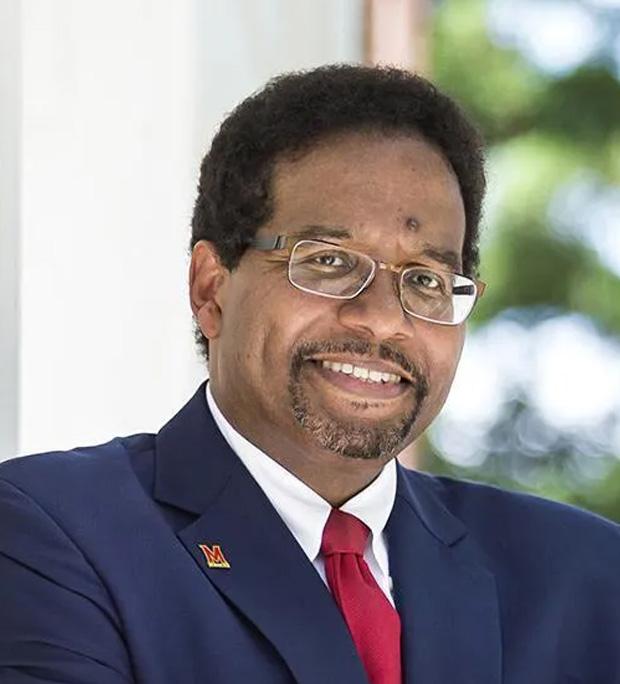
Darryll J. Pines
Darryll J. Pines has proudly served as the 34th president of the University of Maryland since July 2020. The Glenn L. Martin Professor of Aerospace Engineering, Pines has emphasized achieving excellence in all aspects of university life while creating a diverse and multicultural community that allows everyone to reach their full potential. Under his leadership, the University of Maryland instituted Fearlessly Forward, a strategic plan that commits the university to reimagining learning; taking on humanity’s grand challenges; investing in people and communities; and partnering to advance the public good. He spearheaded the creation of the Grand Challenges Grants program, under which 50 university projects received $30 million in university-sponsored grants to study and implement solutions in areas such as sustainability, literacy, and food, energy and water security. Pines also led the creation of the new Artificial Intelligence Interdisciplinary Institute at Maryland (AIM); and spearheaded significant investments in quantum research and development to make the College Park region the “Capital of Quantum.”

Tsu-Jae King Liu
Tsu-Jae King Liu is the President of the National Academy of Engineering. In 1996 she joined the faculty of the Department of Electrical Engineering and Computer Sciences at the University of California, Berkeley where she has served in various administrative leadership positions, most recently as Dean of the College of Engineering from July 2018 through June 2025. Liu is renowned for her contributions in the field of microelectronics, which include co-developing the FinFET transistor design that is used in all leading-edge computer chips and smartphones today. Her recognitions include the DARPA Significant Technical Achievement Award and the IEEE Electron Devices Society Education Award. Liu is a Fellow of the IEEE and the National Academy of Inventors, and was inducted into the U.S. National Academy of Engineering in 2017. She has served on the boards of directors for Intel Corporation and MaxLinear Inc., and as a member of advisory committees for NSF, NIST, and PCAST.

Robert Crawhall
Robert Crawhall is a Fellow and CEO of the Canadian Academy of Engineering. He spent the first half of his career in the private sector working in advanced manufacturing, energy systems, telecommunications, and semiconductor packaging. Prior to joining the CAE, he led innovation not-for-profits in telecom, e-commerce, nanotechnology and IoT. He holds a Bachelor’s degree in Mechanical Engineering and a Master’s in Electrical Engineering from McGill University in Montreal, Canada. He holds a PhD in EMI/EMC from the University of Ottawa. While living mostly in Montreal and Ottawa, Robert started his primary education in Bethesda, MD, and finished high school in San Diego, CA.
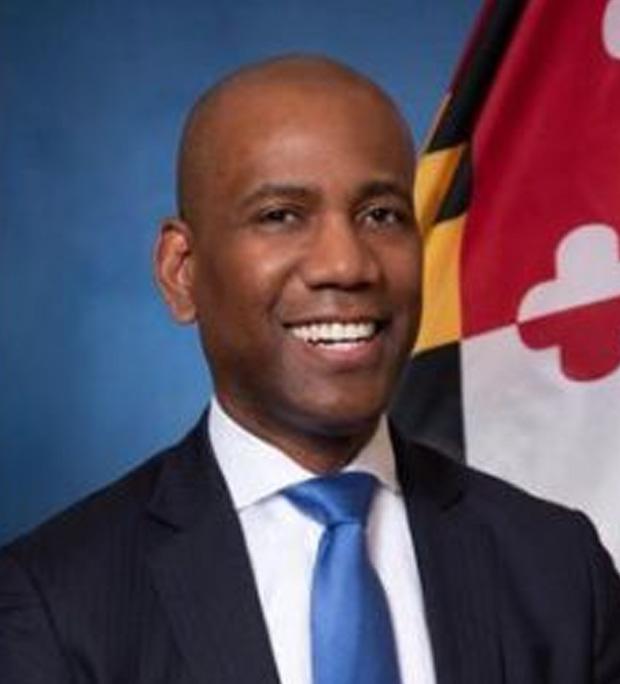
Ricardo Benn
Ricardo Benn is the Deputy Secretary at the Maryland Department of Commerce where he leads the Offices of International Investment and Trade, Strategic Industries, Federal and Military Affairs and Talent and Workforce in improving the business climate for the State of Maryland. Ricardo previously led the Advisory Services practice at Capgemini Government Solutions, where he has successfully guided strategic initiatives for National Security, Federal Civilian, and Commercial clients. He is a seasoned executive working with leading organizations in the U.S., Europe, Middle East and Asia, and has extensive experience driving organizational transformation, strategy execution, and technology adoption across public and private sectors. As a business leader at top global consulting firms, he managed multi-million dollar practices, secured strategic contracts and helped clients deliver upon exceptional growth targets. His ability to think outside the box and communicate effectively has made him a trusted advisor across diverse industries.

Hanneke Krekels
Hanneke Krekels is Corporate Vice President, Global AI Markets, at AMD, and responsible for expanding AMD’s strategic vision for AI, driving new ecosystem capabilities, and accelerating strategic AI engagements globally across public and private sectors. Previously Hanneke was the Corporate Vice President, CEO Operations. She was also the General Manager of the Core Markets Business Unit, responsible for markets such as Automotive, Industrial, Healthcare and Aerospace & Defense. She joined Xilinx (now part of AMD) in 2008, focusing on developing the company’s Aerospace & Defense business. She later successfully started the Test, Measurement & Emulation business. Hanneke has led Product Management and Marketing organizations for companies such as Cypress Semiconductor and Philips Electronics. Her awards include the Tribute to Women and Industry award from the Silicon Valley YWCA and the 2024 Diversity Journal’s Women to Watch in Leadership award. She holds a Master of Science in Industrial Design Engineering from Delft University of Technology in the Netherlands.
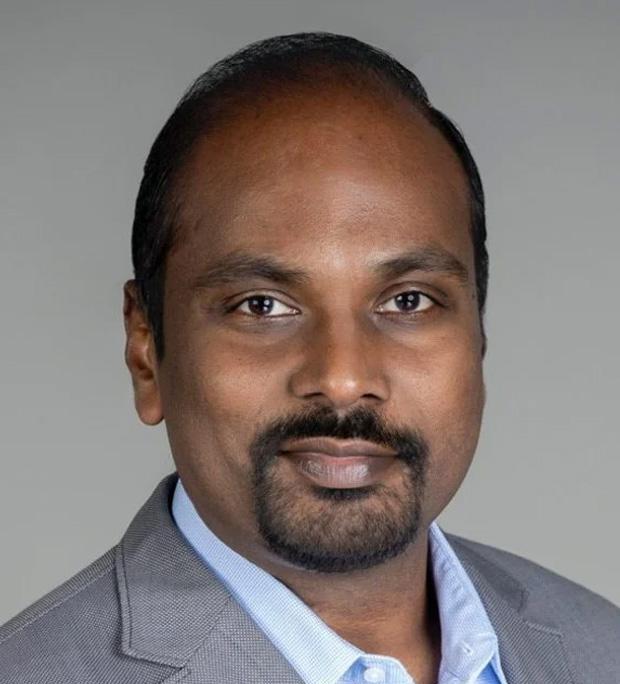
Vik Malyala
Vik Malyala is the senior vice president of technology and AI, and president and managing director of EMEA at Supermicro. With nearly 30 years of experience in product engineering, ASIC development, and technology leadership, Malyala has played a critical role in shaping Supermicro’s global strategy, growth and innovation since joining the company in 2009. A former design engineer at Serverworks—later acquired by Broadcom—Malyala brings deep expertise in semiconductors and high-performance systems. He has led Supermicro’s advancements in AI, HPC, and sustainable data center technologies, championing energy-efficient solutions such as liquid cooling. He fostered strategic partnerships with industry leaders like NVIDIA, AMD, and Intel, enhancing Supermicro’s Total IT Solutions.

Mattew Borman
Matthew Borman is senior counsel in Akin’s International Trade Group and Nonresident Senior Technical Expert at CSIS. From 2001 – 2025, he served 24 years as Principal Deputy Assistant Secretary for Strategic Trade and Technology Security and Deputy Assistant Secretary for Export Administration in the Department of Commerce’s Bureau of Industry and Security. In those roles, he developed and implemented export control policies to control the proliferation of sensitive and emerging technologies, including advanced integrated circuits, semiconductor manufacturing equipment, and quantum, as well as restrictions on trade with Russia. His career awards included: Finalist for the Samuel J. Heyman Service to America Paul A. Volcker Career Achievement Award; Presidential Rank Award; Department of Commerce Gold Medals; Department of State Superior Honor Award; Department of the Army Commander’s Award; and National Intelligence Meritorious Unit Citation. He received a J.D. from New York University School, an M.A. from Northeastern University, and a B.A. from Northwestern University.

Hal Finkel
Hal Finkel serves as the Acting Associate Director for the Advanced Scientific Computing Research program within the Department of Energy’s Office of Science, and the Office of Science lead for Genesis Mission, a new national initiative to accelerate and enhance R&D using AI and advanced computing. Prior to joining ASCR, Hal spent nearly a decade at the Argonne National Laboratory as a physicist and computational scientist at Argonne’s Leadership Computing Facility. Hal built and led a team at Argonne focused on advancing the computer science of compiler technology and programming languages. The team contributed significantly to the efforts of the Exascale Computing Project in addition to exploring artificial intelligence, quantum computing, spatial architectures, and other forward-looking technologies. Hal holds a Ph.D. in Physics from Yale University, where he focused on early-universe cosmology.
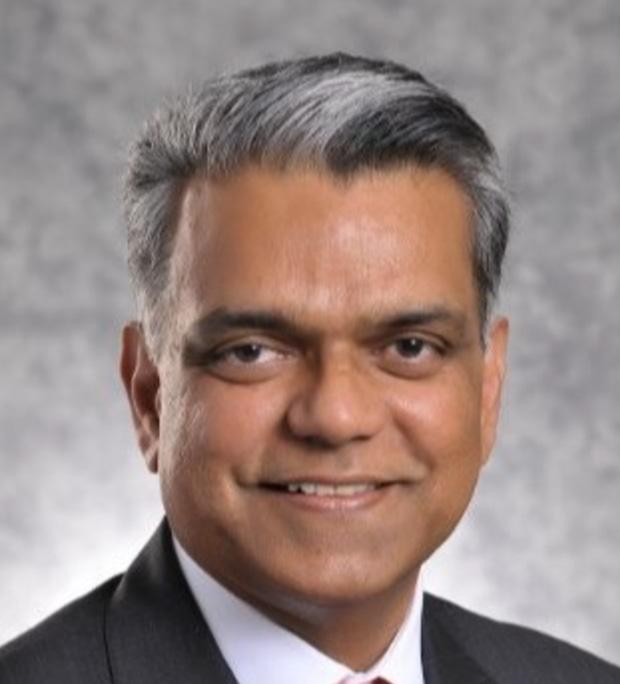
Dev Shenoy
Dev Shenoy serves as a strategic advisor to IBM Semiconductors within IBM Research. He recently served as the principal director for microelectronics in the Office of the Under Secretary of War for Research and Engineering, ensuring access to the most advanced semiconductor-based capabilities in the world. Dev conceptualized and created the Microelectronics Commons (ME Commons) program. To strengthen the ME Commons network and leverage investments in semiconductor prototyping, Dev initiated and established strong Interagency CHIPS collaborations with the National Science Foundation and the Department of Commerce. In prior roles, Dev served as the director of microelectronics innovation and as director of advanced technologies at the University of Southern California’s Information Sciences Institute and Chief Engineer in the Advanced Manufacturing Office at the Department of Energy.

Josh Mazurek
Joshua Mazurek is a Water Program Manager at Meta, with efforts focused on data center site selection, planning, and capacity delivery. His work directly supports Meta’s water stewardship and sustainability initiatives. Prior to joining Meta, Josh was a Technical Program Manager at Google. His work centered on creating hyperscale fiber optic designs for data centers throughout the US, including several first-of-a-kind deployments which were instrumental towards delivering critical network capacity. Josh also served part time as a Second Lieutenant in the 121st Engineer Regiment of the Maryland Defense Force, and holds a Masters in Hydraulic Engineering from Imperial College London, in addition to a Bachelor of Civil Engineering from the University of Maryland, College Park. In 2024, he was inducted into the Clark School Early Career Distinguished Alumni Society.

Ellen Zegura
Ellen Zegura is Senior Science and Engineering Advisor in the Office of the Director at the National Science Foundation with responsibility for the AI portfolio. She previously held the title of Acting Assistant Director for the Computer and Information Science and Engineering Directorate of NSF. In that role, she had oversight for the full breadth of the CISE research and education portfolio which includes AI research and education, cybersecurity, cyber-physical systems, infrastructure for science, and emerging technologies such as quantum and advanced wireless. She is on loan from Georgia Tech where she is Regents Professor and Fleming Chaired Professor in computer science. Her research and teaching interests lie in mobile and wireless networking and in undergraduate computing and AI education. She is a Fellow of the IEEE and of the ACM.
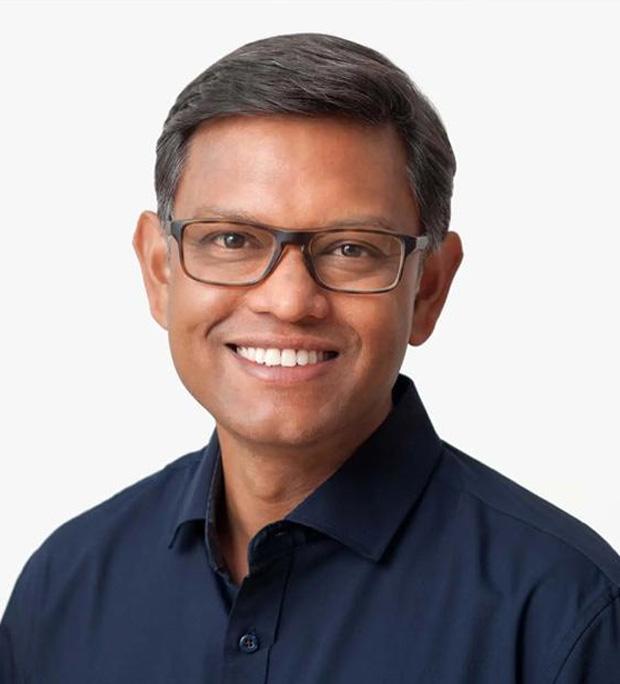
Bikash Koley
Bikash oversees the physical infrastructure powering and connecting all of Google’s consumer services, AI services, and Cloud services globally. This team is responsible for the strategy, operations, technology roadmap, delivery, and optimization for Google’s global footprint of datacenters, energy and network infrastructure, across design, power, space, and fleet-wide demand planning. Bikash was previously executive vice president and chief technology officer of Juniper Networks. In this role, Bikash charted Juniper’s technology strategy and led the execution of the company’s critical technology innovations. Specifically, Bikash was responsible for Juniper’s telco cloud and virtualization, multicloud enterprise datacenter, and software defined enterprise networking products and technologies. Prior to Juniper, Bikash spent close to ten years at Google, where he was a Distinguished Engineer and the Head of Network Architecture, Engineering and Planning.
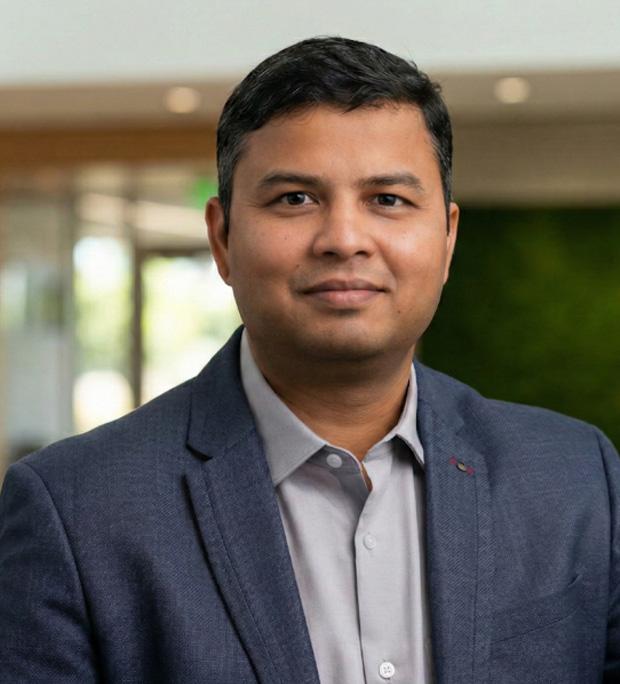
Pradeep Gupta
Pradeep Gupta is a Vice President at NVIDIA, where he leads the worldwide Solutions Architecture and Engineering organization and is responsible for the technical strategy and customer success across NVIDIA’s most critical market segments. His mandate is to accelerate the adoption of Generative AI, accelerated computing, and industrial digitalization, helping organizations transform their infrastructure to meet the demands of the AI era. Prior to his current leadership role, Pradeep served as Director of the Solutions Architecture and Engineering team, where he focused on deploying production-grade AI in life-critical systems such as autonomous driving and healthcare. Before joining NVIDIA, he held technical leadership positions at IBM Software Labs, Hewlett-Packard, and Infosys Labs, working on high-performance computing and distributed systems. Pradeep holds a Master of Research degree from the Indian Institute of Science, Bangalore, where his research focused on compute-efficient algorithms.
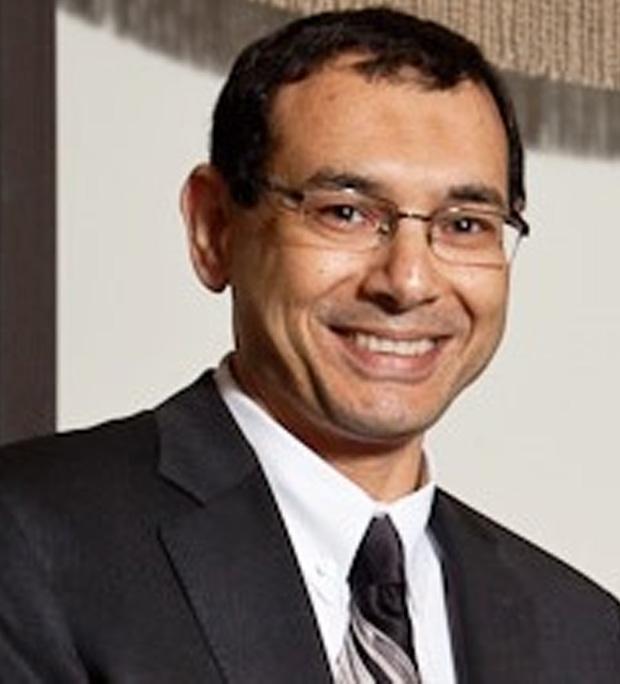
Gamal Refai-Ahmed
Gamal Refai-Ahmed is a senior technical executive and internationally recognized leader in thermal management, silicon power architecture, and advanced packaging for AI, high-performance computing, telecommunications, and aerospace systems. Over more than three decades at AMD, Xilinx, GE Global Research, Cisco, and Nortel, he has pioneered solutions that define how heat, power, and data are managed in today’s most demanding platforms. Gamal is an elected Member of the U.S. National Academy of Engineering and a Fellow of IEEE, ASME, the Canadian Academy of Engineering, and the Engineering Institute of Canada. Professional societies have recognized his leadership with awards such as the ASME Service Award, Calvin Lecture Award, and Excellence in Thermal Management (Allan Kraus) Award, as well as the IEEE Canada R.H. Tanner Industrial Leadership Silver Medal. He has also been elevated to ASME Fellow and later ASME Life Fellow.